

Henrik Aulbach est un rédacteur santé expérimenté avec plus de 10 ans d’expérience, expert en substances végétales actives et en culture, cofondateur, auteur de livres et rédacteur indépendant spécialisé dans le domaine de la santé depuis 2020.
Découvrez ici plus d’informations sur cet auteur.

Sauge : effets, utilisation et dosage
Tout sur la sauge

Hildegards Tipp:
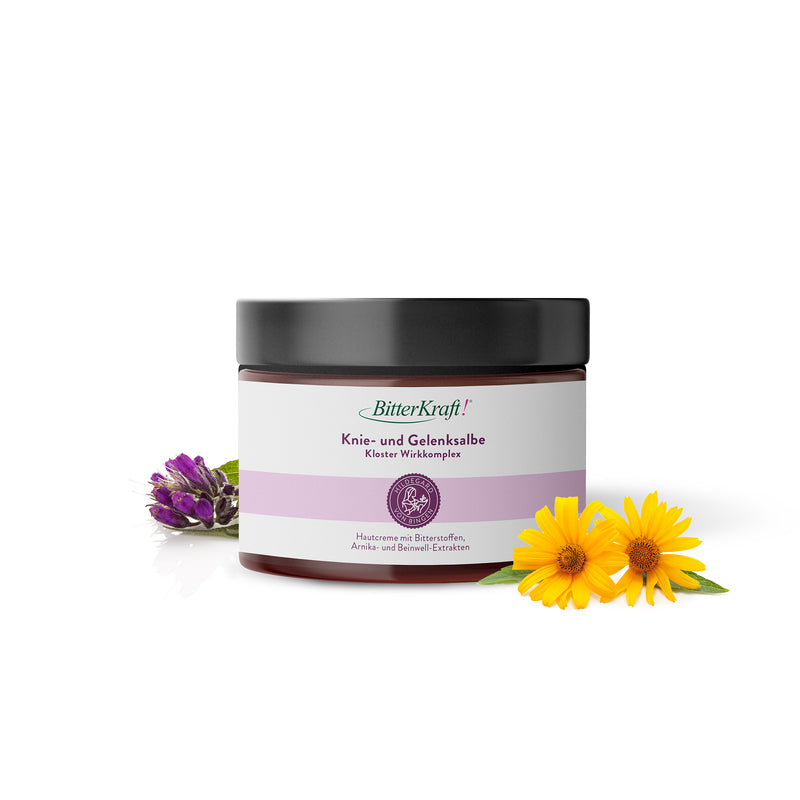
- Salbe für beanspruchte Haupartien von Knien und Gelenken nach Hildegard von Bingen
- Rezeptur auf Basis von 800 Jahren Klosterwissen
- Bitterkraft – der Pionier seit 1996 von 4.000 Heilpraktikern verwendet!
- Beste Naturheilkunde: Bio & vegan
Occurrence of Sage
True sage (Salvia officinalis) reached Central Europe from the Mediterranean region as early as the early Middle Ages and is now widespread here. It was monks who brought the sage leaves over the Alps to northern regions because of their well-known healing effects since antiquity. Although sage has long been a typical feature in our native gardens, its warm homeland makes it very sensitive to cold. True sage needs a lot of sun but copes very well with water scarcity. Therefore, it also thrives on dry and rocky soils, preferably enriched with lime.
Ingredients of Sage
The much praised healing effect of the evergreen herb is due to the sage leaves. The most important ingredients of the leaves are essential oil, tannins, as well as bitter substances, diterpenes, triterpenes, and flavonoids. Sage leaves of other species contain similar active ingredients but differ in their composition from true sage.
Effects of Sage
Because of its distinctive slightly bitter taste, true sage is widely used as a spice in the kitchen. Dried or freshly picked sage leaves add an extra kick to hearty dishes. As a spice, the herb goes very well with meat dishes, fish, and herb cheese. Fresh sage leaves are often used as poultry stuffing. Sage tea also tastes delicious.
True sage is especially valuable as a medicinal plant – a use already hinted at by its name: the Latin salvus translates to whole, healthy, and sound. Sage leaves promise an anti-inflammatory effect in the mouth and throat area. Therefore, the plant helps well with infections of the upper respiratory tract or gum inflammation. In addition, sage leaves have an antiperspirant effect. For this reason, a foot bath with sage is often recommended for sweaty feet.
Traditional medicine also uses sage leaves to treat stomach and intestinal complaints. Flatulence and bloating are said to be relieved with sage. It is especially good at supporting fat digestion.
Appearance of Sage
You can recognize true sage by its characteristic leaves. They are narrow and taper to a point at the end. The upper side of the sage leaves is covered with a silvery layer of hairs, while the underside is rather felted.
Interesting Facts about Sage
Sage is not recommended during pregnancy and breastfeeding. This is due to the contracting effect of the sage leaves, which could trigger premature labor. Moreover, they are said to inhibit milk production.

À propos de l’auteur Henrik Aulbach
Weitere Artikel
Amers amers avant le repas : pourquoi l'ordre est crucial
Amers amers pour l'estomac avant le repas » Selon Hildegard von Bingen ✓ Sans additifs ✓ Fabriqué en Allemagne – En savoir plus maintenant
Smoothies riches en amers : recettes vertes pour bien démarrer la digestion le matin
Smoothies aux amers pour le matin » Selon Hildegarde de Bingen ✓ Végan ✓ Sans additifs – Découvrez les recettes maintenant !
Les recettes d'épeautre de Hildegard von Bingen pour une digestion saine
Recettes d'épeautre de Hildegard von Bingen » Selon Hildegard von Bingen ✓ Sans additifs ✓ Certifié bio – Découvrez maintenant