

Henrik Aulbach est un rédacteur santé expérimenté avec plus de 10 ans d’expérience, expert en substances végétales actives et en culture, cofondateur, auteur et rédacteur indépendant spécialisé dans le domaine de la santé depuis 2020.
Découvrez ici plus d’informations sur cet auteur.

Encens dans la médecine monastique
Tout sur l'encens

Hildegards Tipp:
- Wertvolle Bitterstoffe nach Hildegard Von Bingen
- Rezeptur auf Basis von 800 Jahren Klosterwissen
- Bitterkraft – der Pionier seit 1996 von 4.000 Heilpraktikern verwendet!
- Beste Naturheilkunde: Bio & vegan
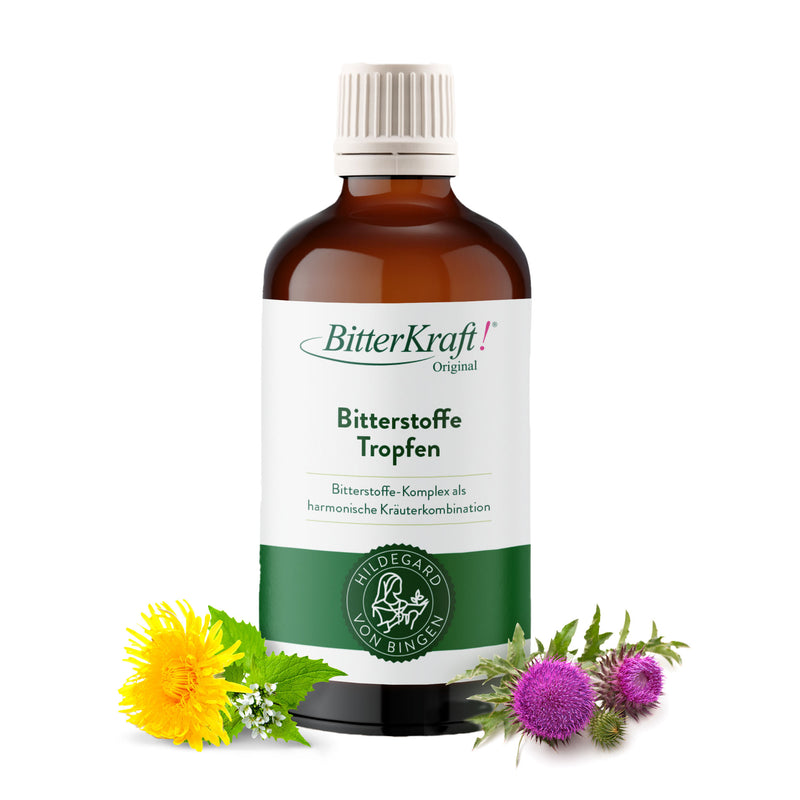
Occurrence of Frankincense
Frankincense (Olibanum) is used for both ritual and medicinal purposes. It is obtained from the granular resin of certain Boswellia species – a genus of plants in the family of balsam trees. Due to their valuable resin, frankincense trees are among the most precious plants on our planet. About 25 species belong to Boswellia, but the sought-after resin comes almost exclusively from the following four types:
- Boswellia sacra
- Boswellia serrata
- Boswellia papyrifera
- Boswellia frereana
Boswellia thrives where other life struggles: in the dry regions of Africa, Arabia, and India. Harsh desert areas are home to these inconspicuous-looking trees. Between rocks and cliffs, at altitudes up to 1200 meters, the frankincense tree grows, enduring wind gusts and prolonged dry periods.
Ingredients of Frankincense
For medicinal use, the resin of Boswellia serrata is particularly important, the Indian frankincense. Its effects are mainly due to the triterpenic acids it contains, primarily boswellic acids, the essential oil, and incensol.
Effects of Frankincense
Frankincense has always had a magical reputation. It was already used in many religious ceremonies in antiquity. Its value was then compared to gold. The milky resin was considered white gold. As incense, frankincense emits its aromatic heavenly scent. In the Catholic Church, the smoke rising from frankincense symbolizes prayer directed to heaven.
Almost as old is the knowledge of its medicinal effects. In the past, many doctors and scholars emphasized the positive effects of frankincense. The ancient Egyptians made ointments from the resin and valued it for its pleasant smell. Traditional Indian medicine (Ayurveda) has always assigned a firm place to frankincense. The Greek physician Hippocrates recommended its use, among other things, for wound treatment. Hildegard of Bingen also knew and valued frankincense in the Middle Ages.
Today, numerous studies have proven the medicinal benefits of frankincense, especially Boswellia serrata. Great hopes rest particularly on its anti-inflammatory effects. Indian frankincense seems suitable for treating rheumatism and chronic inflammatory diseases.
Frankincense is also attributed with pain-relieving, decongestant, and antibiotic effects. It is still debated whether the contained incensol can relieve anxiety and contribute to relaxation.
Appearance of Frankincense
Boswellia trees reach heights of up to 8 meters and thus remain relatively small. The crown spreads wide and maintains a flat shape. To obtain the precious resin, branches and trunk are cut. It is located in the excretion spaces of the bark.

À propos de l’auteur Henrik Aulbach
Weitere Artikel
Amers amers avant le repas : pourquoi l'ordre est crucial
Amers amers pour l'estomac avant le repas » Selon Hildegard von Bingen ✓ Sans additifs ✓ Fabriqué en Allemagne – En savoir plus maintenant
Smoothies riches en amers : recettes vertes pour bien démarrer la digestion le matin
Smoothies aux amers pour le matin » Selon Hildegarde de Bingen ✓ Végan ✓ Sans additifs – Découvrez les recettes maintenant !
Les recettes d'épeautre de Hildegard von Bingen pour une digestion saine
Recettes d'épeautre de Hildegard von Bingen » Selon Hildegard von Bingen ✓ Sans additifs ✓ Certifié bio – Découvrez maintenant