

Henrik Aulbach is an experienced health editor with over 10 years of experience, expert in plant-based active ingredients and cultivation, co-founder, book author, and freelance specialist writer in healthcare since 2020.
Learn more here about this author.

Lavande – Effets thérapeutiques et utilisation
Tout sur la lavande

Hildegards Tipp:
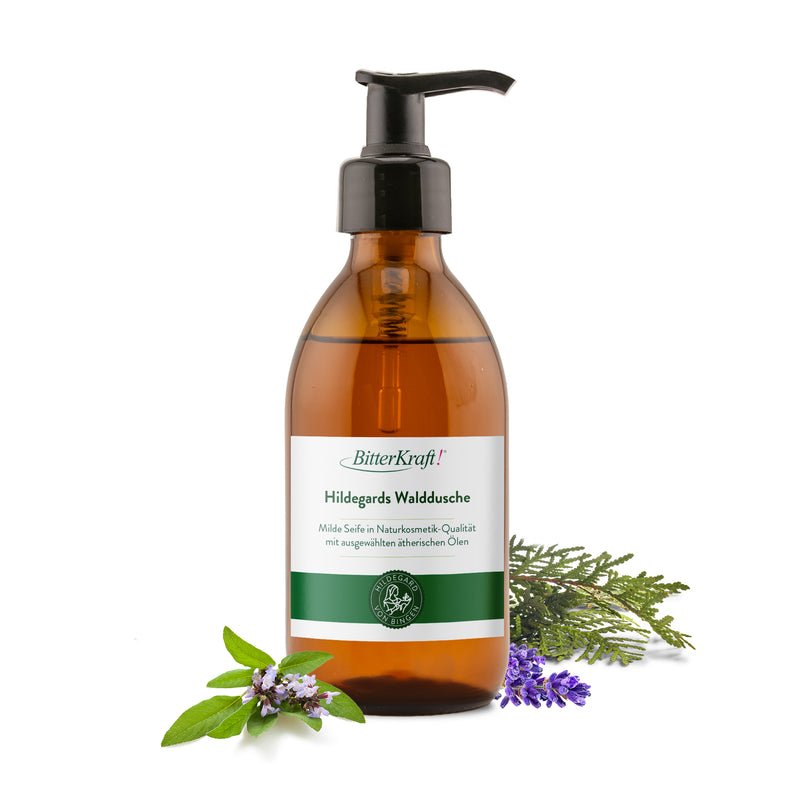
- Milde Seife in Naturkosmetik-Qualität mit ausgewählten ätherischen Ölen
- Rezeptur auf Basis von 800 Jahren Klosterwissen
- Bitterkraft – der Pionier seit 1996 von 4.000 Heilpraktikern verwendet!
- Beste Naturheilkunde: Bio & vegan
Occurrence of Lavender
Lavender is a plant genus within the family of Lamiaceae, which also includes sage and mint, comprising 28 to 36 species depending on the author. At the same time, it is the short form of True Lavender (Lavandula angustifolia), a plant species of the same family.
As a sun lover, True Lavender originates from the Mediterranean region, especially widespread along the coasts. Dry and rocky locations form its habitat. Benedictine monks brought it early to the north, where it distinguished itself as a garden beauty with its bright flower spikes and aromatic scent. As a hardy plant, it even withstands the cold winter temperatures here – at least in the milder climate of wine-growing regions.
Otherwise, it needs protection from frost. As long as lavender receives plenty of sun at its location, a nutrient-poor, preferably well-drained soil is sufficient. However, waterlogging causes it to wither. In the garden, drainage with coarse sand or gravel proves helpful.
Ingredients of Lavender
True Lavender contains essential oil, the so-called lavender oil, which consists among other things of linalool, linalyl acetate, and other terpenes. Other ingredients of the fragrant plant include tannins and phenolic acids such as rosmarinic acid.
Effects of Lavender
With its bright flowers, lavender beautifies every garden and spreads a Mediterranean flair. The shrub provides plenty of food for bees. It also has a lot to offer as a spice. Its aroma ranges from bitter to spicy. It somewhat resembles rosemary. Due to its intense flavor, lavender should be used very sparingly in the kitchen. It gives hearty dishes like poultry, fish, and soups a pleasant seasoning. It also adds a nice touch to desserts.
As a medicinal plant, True Lavender has been used for centuries. Today, its flowers or lavender oil, extracted by steam distillation from the flowers, are used medicinally. Lavender flowers can be brewed into a tea for internal use or applied externally as an infusion.
The main application of lavender is in the treatment of restlessness and stress. Its mildly calming effect is said to help with migraines, nervous exhaustion, and sleep disorders. The benefit of lavender oil for anxiety has already been confirmed by a study. Because lavender is sometimes attributed antibacterial effects, it is occasionally added to gargle solutions. It is also said to soothe skin irritations.
Appearance of Lavender
Only the lower part of the shrub becomes woody. Characteristic of True Lavender are its violet flowers, which grow in the form of spikes. If you prune it in time, you can even enjoy a second bloom. Outside the flowering period, which begins in July, its silvery-gray leaves are fascinating.

About the author Henrik Aulbach
Weitere Artikel
Amers amers avant le repas : pourquoi l'ordre est crucial
Amers amers pour l'estomac avant le repas » Selon Hildegard von Bingen ✓ Sans additifs ✓ Fabriqué en Allemagne – En savoir plus maintenant
Smoothies riches en amers : recettes vertes pour bien démarrer la digestion le matin
Smoothies aux amers pour le matin » Selon Hildegarde de Bingen ✓ Végan ✓ Sans additifs – Découvrez les recettes maintenant !
Les recettes d'épeautre de Hildegard von Bingen pour une digestion saine
Recettes d'épeautre de Hildegard von Bingen » Selon Hildegard von Bingen ✓ Sans additifs ✓ Certifié bio – Découvrez maintenant