

Henrik Aulbach est un rédacteur santé expérimenté avec plus de 10 ans d’expérience, expert en substances végétales actives et en culture, cofondateur, auteur de livres et rédacteur indépendant spécialisé dans le domaine de la santé depuis 2020.
Découvrez ici plus d’informations sur cet auteur.

Habichtskraut : effets, utilisation et posologie
Tout sur l'orpin des Alpes

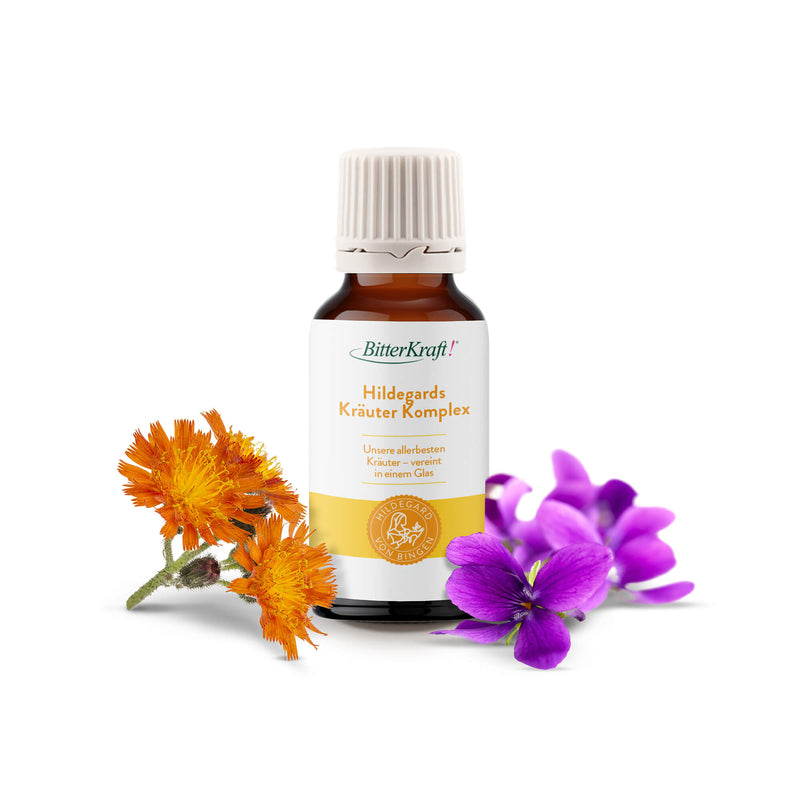
Hildegards Tipp:
- Milder Kräutergeist mit 5 Hildegard-Heilpflanzen für die Seele
- Rezeptur auf Basis von 800 Jahren Klosterwissen
- Bitterkraft – der Pionier seit 1996 von 4.000 Heilpraktikern verwendet!
- Beste Naturheilkunde: Bio & vegan
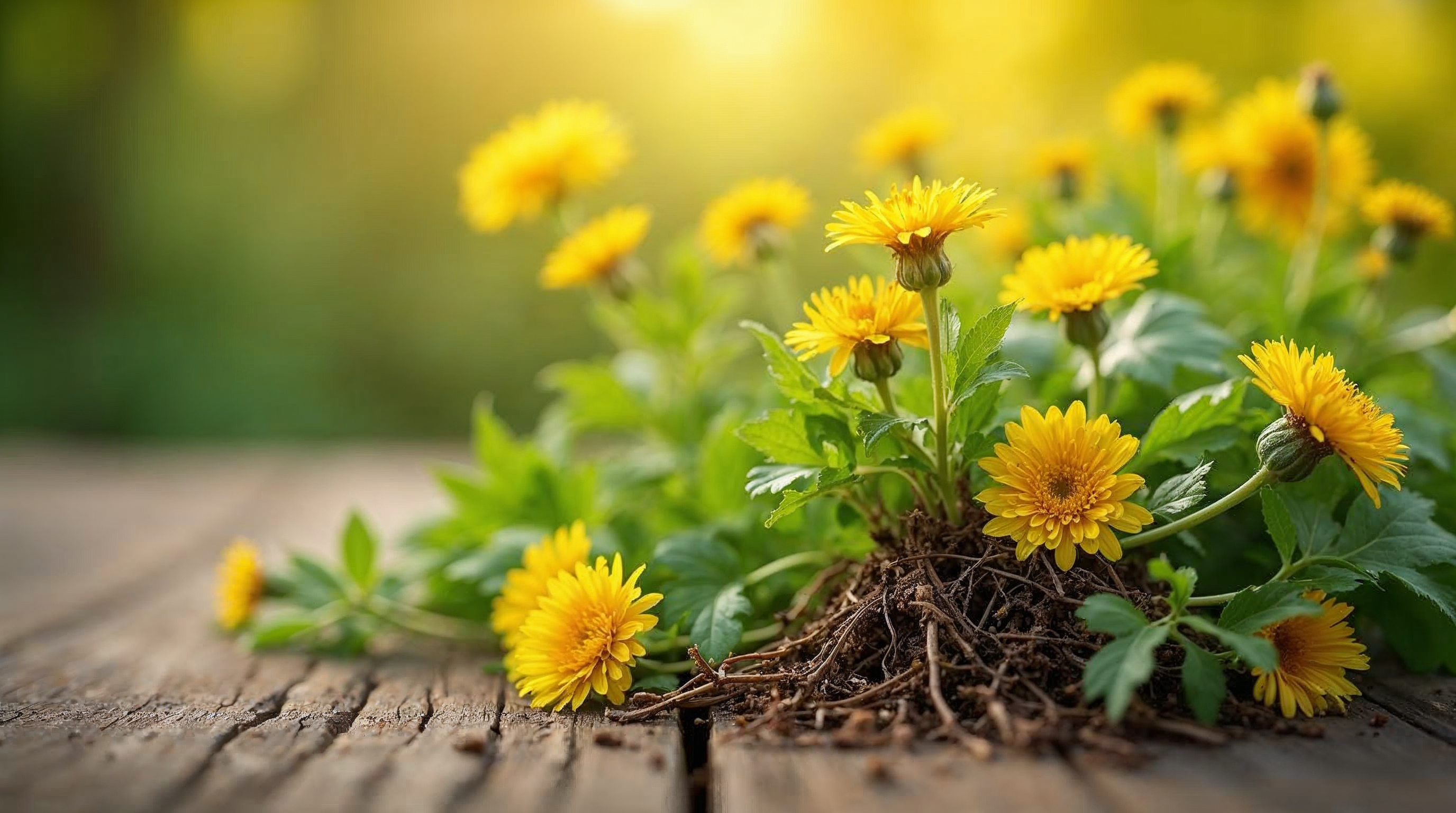
Occurrence of Hawkweed
From a distance, hawkweed (Hieracium) strongly resembles dandelion, but on closer inspection, it differs in some features from its relatives, which also belong to the daisy family. Numerous representatives of the plant genus are widely distributed here, although relatively unknown. These include both the Small and the Orange-Red Hawkweed, which were often used in the past as native medicinal herbs. Even Hildegard von Bingen liked to use the herb.
The herbaceous plants are quite undemanding and thrive even on fairly dry soils. Hawkweeds grow in meadows, forest clearings, by the roadside, but also in home gardens, where they can quickly form an extensive carpet of flowers and displace other plants.
Ingredients of Hawkweed
Coumarins, flavonoids, mucilages, and tannins are important ingredients of hawkweed.
Effects of Hawkweed
Today, hawkweed is often considered a weed in gardens. However, the plant can be wonderfully used culinarily. Fresh leaves, finely chopped, enhance salads, herb butter, spreads, and soups. The flowers of the Small Hawkweed taste slightly sweet and complement cream cheese, herb butter, and salads well – not least as an attractive decoration.
In earlier times, hawkweed was especially valued as a medicinal plant that was supposed to grant the eyesight of a hawk. This effect is probably the origin of the herb's name. This use has since been abandoned.
In the Middle Ages, hawkweed was a component of various herbal mixtures prepared by the herbalist Hildegard von Bingen. She attributed a heart-strengthening effect to the herb and mixed it for various preparations with dittany and galangal.
Hawkweed is also said to help with digestive complaints, especially diarrhea. More reliably, it is used for inflammations in the mouth and throat. Hawkweed is considered astringent and anti-inflammatory. It is used internally as tea or extract for rinsing and gargling. Externally, it is said to help treat wounds. The Small Hawkweed is also known as a diuretic, meaning it has a urine-promoting effect.
Appearance of Hawkweed
Hawkweeds include countless subspecies, some of which are very difficult to distinguish from each other. They are perennial herbaceous plants that can develop into considerable shrubs. The plant forms quite strong taproots, and the hairy stem grows upright. The Small Hawkweed reaches heights of 10 to 30 centimeters, while the Orange-Red, which is native mainly to European mountain regions, grows up to 60 centimeters tall. The leaves are located at the base of the stem. Its flowers, reminiscent of dandelions, are characteristic: yellow in the Small Hawkweed and yellow-orange to orange-red in the Orange-Red, as the name suggests.

À propos de l’auteur Henrik Aulbach
Weitere Artikel
Amers amers avant le repas : pourquoi l'ordre est crucial
Amers amers pour l'estomac avant le repas » Selon Hildegard von Bingen ✓ Sans additifs ✓ Fabriqué en Allemagne – En savoir plus maintenant
Smoothies riches en amers : recettes vertes pour bien démarrer la digestion le matin
Smoothies aux amers pour le matin » Selon Hildegarde de Bingen ✓ Végan ✓ Sans additifs – Découvrez les recettes maintenant !
Les recettes d'épeautre de Hildegard von Bingen pour une digestion saine
Recettes d'épeautre de Hildegard von Bingen » Selon Hildegard von Bingen ✓ Sans additifs ✓ Certifié bio – Découvrez maintenant