

Henrik Aulbach is an experienced health editor with over 10 years of experience, an expert in plant-based active ingredients and cultivation, co-founder, book author, and freelance specialist writer in healthcare since 2020.
Learn more about this author here.

Valériane dans la médecine monastique
Tout sur la valériane

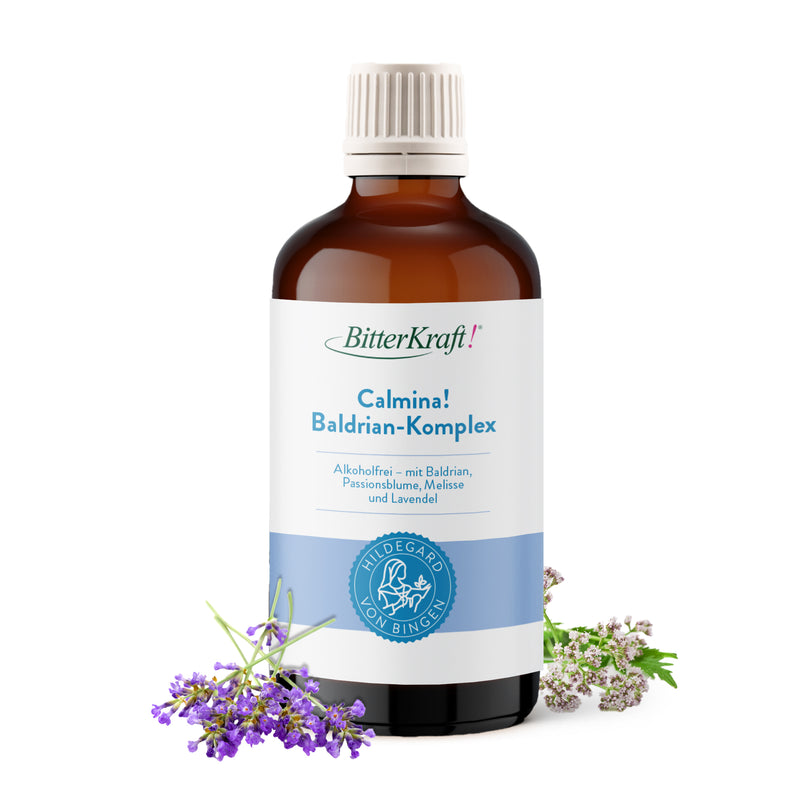
Hildegards Tipp:
- Fein abgestimmtes Nahrungsergänzungsmittel mit Baldrian, Lavendel, Passionsblume & Hopfen
- Rezeptur auf Basis von 800 Jahren Klosterwissen
- Bitterkraft – der Pionier seit 1996 von 4.000 Heilpraktikern verwendet!
- Beste Naturheilkunde: Bio & vegan
Occurrence of Valerian
The true valerian (Valeriana officinalis) is a honeysuckle family plant that is found throughout most of Europe and further east in Siberia and the East Asian countries up to Taiwan. This frost-resistant plant prefers sun and partial shade. Thanks to its modesty, it thrives in almost any soil, but it especially likes moist soils. It usually tolerates flooding well, so you often find valerian in meadows near watercourses.
How Valerian Works
You probably know the famous effect of valerian: it is one of the best-known medicinal plants with a calming effect. Its roots and an extract from them are used, often in the form of drops and tablets.
For tension, nervousness, restlessness, and sleep disorders, valerian is used orally. It is also available as a bath additive for external use. It is not yet fully understood which substance is exactly responsible for valerian’s calming effect. Presumably, its unique composition and the interaction of its individual components are the decisive factors.
Ingredients of Valerian
Its most important active ingredients include essential oils, whose complex composition can vary depending on the origin of the valerian. Bornyl acetate and bornyl isovalerianate are among them. They cause the characteristic smell of valerian, which irresistibly attracts cats. The scent resembles the cat attractant. In addition, mono- and sesquiterpenes and valeric acids are present in valerian.
Appearance of Valerian
Valerian can grow up to two meters tall. The herbaceous plant forms feathered leaves about twenty centimeters long. Its oval silhouette has unevenly serrated edges. Between May and July, valerian blooms white to light pink. The flowers are small, only four to five millimeters in diameter, and form umbrella-like clusters in which they lie close together. Their scent is strong and sweet.
Interesting Facts about Valerian
Just like true valerian, lamb’s lettuce belongs to the valerian family and contains some similar ingredients. So, having a delicious lamb’s lettuce for dinner is a good choice.
It is best to plant valerian in a sunny to partially shaded location. Although it thrives best in moist soils, it can also manage with dry ones. The pretty, sweet-smelling flowers attract butterflies and other insects to your garden in summer.

About the author Henrik Aulbach
Weitere Artikel
Amers amers avant le repas : pourquoi l'ordre est crucial
Amers amers pour l'estomac avant le repas » Selon Hildegard von Bingen ✓ Sans additifs ✓ Fabriqué en Allemagne – En savoir plus maintenant
Smoothies riches en amers : recettes vertes pour bien démarrer la digestion le matin
Smoothies aux amers pour le matin » Selon Hildegarde de Bingen ✓ Végan ✓ Sans additifs – Découvrez les recettes maintenant !
Les recettes d'épeautre de Hildegard von Bingen pour une digestion saine
Recettes d'épeautre de Hildegard von Bingen » Selon Hildegard von Bingen ✓ Sans additifs ✓ Certifié bio – Découvrez maintenant